

I am probably one of the few Hong Kong residents who have not taken the high-speed rail from Hong Kong to Shenzhen until now. Okay, maybe an exaggeration, but millions, yes millions (out of a 7 million city population in Hong Kong) travel to mainland cities like Zhuhai or Shenzhen every long weekend for cheaper goods, a better customer experience, and a wider variety of entertainment.
In fact, official numbers say that cross-boundary passenger traffic between the cities has reached a record high of 1.34 million trips in August this year, according to the HK government.
Anyway, as I was saying, I made my journey up this past weekend, and to my surprise, it only took me 15 minutes to get to the train station, 15 minutes to cross the border, and 15 minutes on the bullet train before I was in the city center of Shenzhen -Futian District. That’s really just a normal intracity commute for most major Chinese or U.S cities. And honestly, I felt like an absolute bumpkin in awe of the speed and efficiency and gawking at the parks and buildings when I came out of the station.
I haven’t been to Shenzhen since COVID ended, and my first observation is that at least 30-40% of cars are EVs; it might be a bit anecdotal, but honestly, it felt like everything was battery-powered. [Plug: I have an excellent episode coming out tmr with
, which will be all about the electrification of the economy, China’s energy mix, and how China is powering the AI boom and beyond]Previously, when I thought of big cities in Mainland China, I always envisioned super loud and congested crosswalks and traffic. But the roads were remarkably quiet, with a mix of BYD taxis, small electric buses, electric motorbikes, and e-bikes.


The electrification of the economy couldn’t be more real. But then I questioned whether Shenzhen might be more progressive on this front since BYD is a Shenzhen homegrown firm. As you can see in the pics, pretty much every taxi has now been switched to BYD. In HK, even with so many government incentives, I’d say the majority of cars are still gas. And my family only just switched to an EV a few months ago, it felt like such a novelty to our friends, even.
An observation that Le Shrub and Paulo talked about in their recent trip to SZ as well. BYD is actually just affordable and cool, and people underestimate the power of cool.
XIN Summit
Now, enough with my rant. To the main point, the reason why I was in Shenzhen was to attend this tech conference.
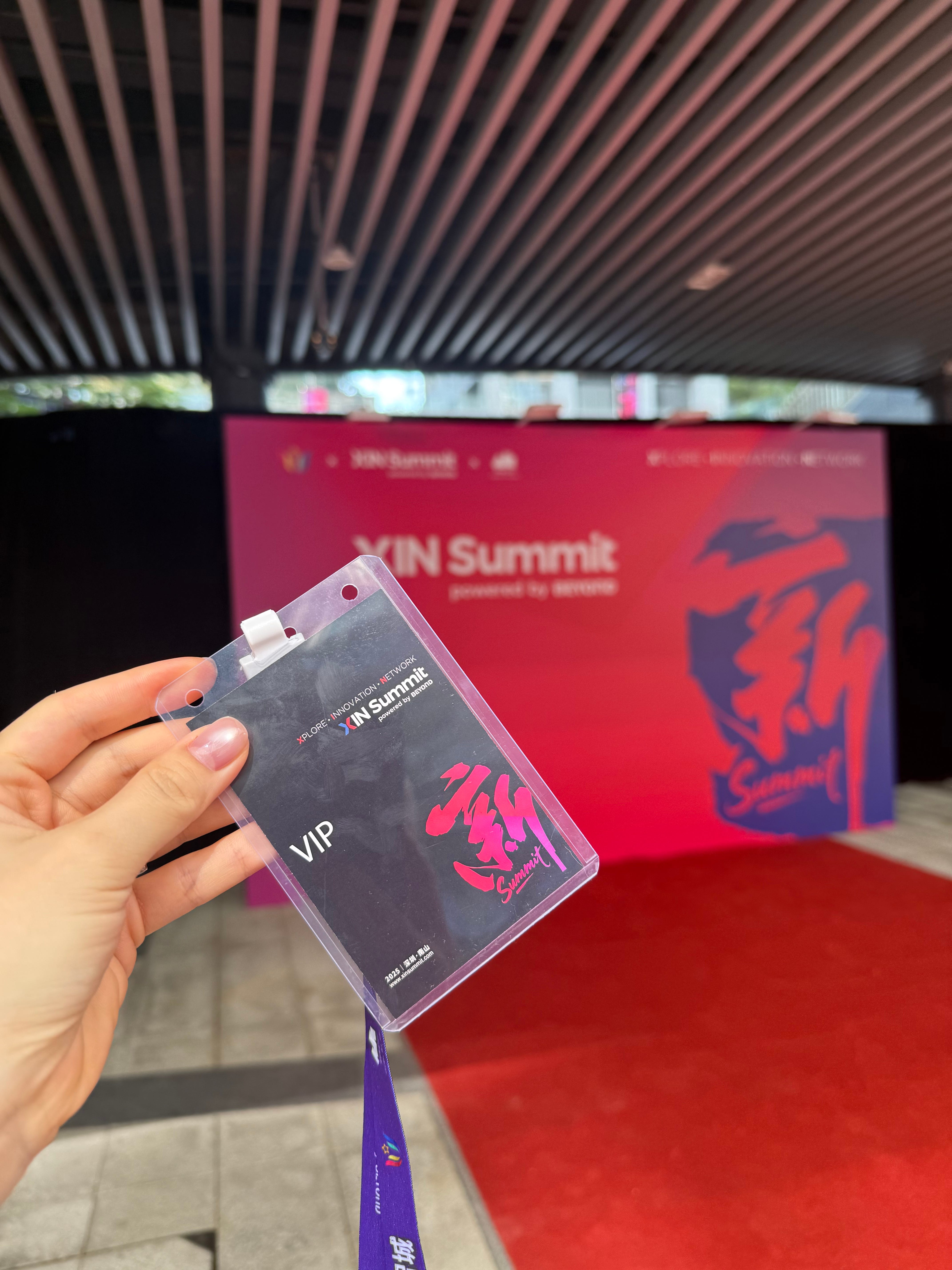
The event, tbh, was underwhelming compared to the Beyond Conference in Macau this year, which was run by the same organizers.
Many of the exhibitors showed very little enthusiasm to showcase their work, while some were just scrolling on their phones and talking to friends. Maybe they could sense that I am not an investor, but they don’t know that I write to a couple thousand of you weekly…;p

The most fun bit was this small corner where startups could do their usual demo pitch, and then they could spin the wheel to match with investors who were there to assess their products. I listened in on a few pitches as well as the mainstage talks, which many focused on physical AI, spatial intelligence, and wearables as the next trend. Seems like the mainstream-nification of embodied AI has hit.
They’re still ‘going-global"‘
However, it was interesting to see that “going global” is even a bigger theme than 6 months ago. Echoing the themes at Beyond, it seemed like more and more companies are thinking of their global strategies.
In fact, a company like NOBODY, a startup focused on phones and wearables, adopted an interesting parallel strategy for the China market and the global market. Founded by Oppo’s co-founder Carl Pei, NOBODY is said to be HQ in London and selling to the European market sleek Gen-Z-sought-after smartphones.
Since they know that they don't have that pricing edge with smartphones in China, they focus on selling wearables like AI-empowered headphones, rings, and whatnot in China. It’s interesting to see how Chinese AI and tech companies are positioning themselves nowadays.
With founders and teams that are much more international than the previous generation, they are significantly less "obviously Chinese,” and many are leveraging their Chinese network of manufacturers and even R&D teams to develop two parallel business strategies/product categories, catering to both the China and non-China markets. This is another trend that will continue to grow I believe. The identity of “a Chinese company” will be more and more murky.
Global talent flow
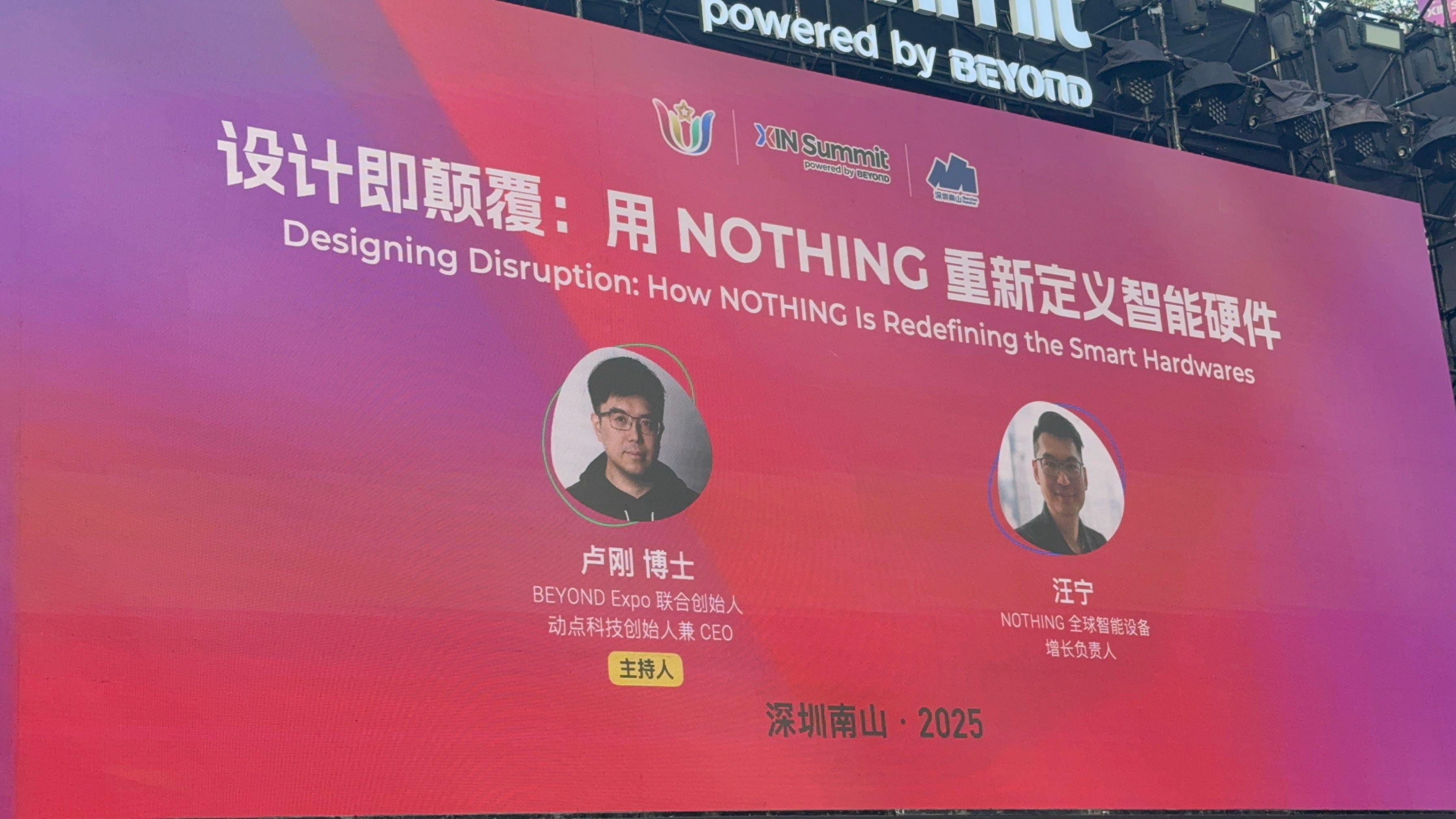
Noted below is Wang Ning, Growth Lead at Nothing, to my point, a Tsinghua and Duke-educated businessman, with experience with McKinsey across “various locations” according to his LinkedIn. How do you define these tech firms purely by nationality/ geography now?
China's Largest AI Hackathon and Shift in Global Talent Flow

Hi All, I'd like to start this post to discuss the perception of Chinese AI talent.
To my point in this article above about talent flow, AI and tech talent are incredibly global. It will be impossible to reverse the “globalisation of talent”, nor will it be beneficial for anyone.
The recent guest of my podcast, Yu Hang, Product Lead at Qoder, was another perfect example of this, where he lived/worked at Meta in Menlo Park for years before returning to China and is now based in Hangzhou working for Alibaba.
I acknowledge that this was just a short and less analytical update compared to our usual posts. But I wanted to take this opportunity to share with you all that I’ll be traveling quite a bit the next few weeks so that updates may come a little more sporadically.
Hit me up if you want to catch up in Singapore end of this week/ next week, and I’ll be going up to Shenzhen again next month to visit the Tencent HQ. Do you have any particular questions you’d like to ask them? Any particular interest in certain business verticals or products? DM me!
It's interesting how seamless that commute sounds, the EV saturation in Shenzhen truly highlights rapid tech adoption and global urban shifts.